
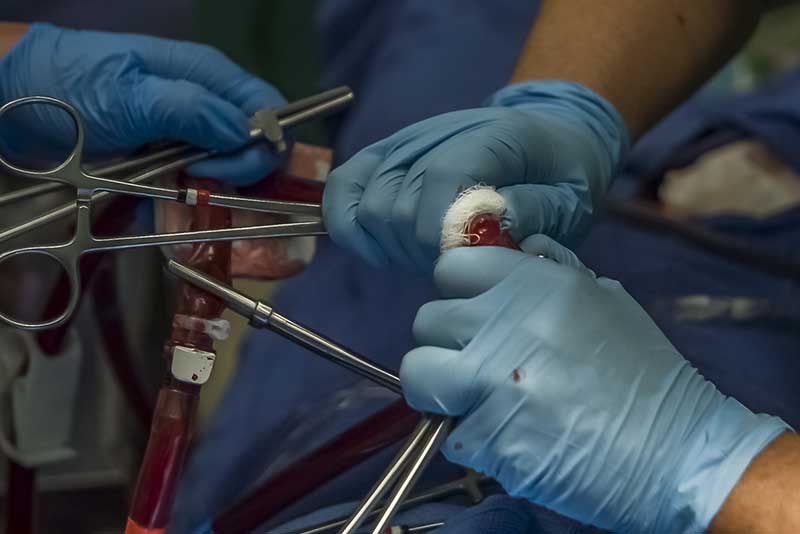
 During the lab, the cannulating physician is able to access the neck and groin to achieve both venous access and arterial access in these locations. This allows the opportunity to witness the physiologic differences associated with two-site veno-venous (VV)access (groin drain and neck return), as well as single-site veno-venous (VV) ECMO with placement of the dual-lumen veno-venous (VVDL)cannula. The cannulating physician will also have the opportunity to convert from veno-venous (VV) ECMO to veno-arterial (VA) ECMO. And, teams gain experience exchanging the venous cannula while interrupting ECMO.
These real-life cannulations, cannula exchanges and conversions from veno-venous ECMO to veno-arterial (VA) ECMO and vice versa are achievable in simulation to provide an invaluable opportunity for attendees. For the physicians and ECMO team members, these cannulations and exchanges provide the experience needed to appropriately manage the circuit and patient while the cannulating physician secures the needed cannula.
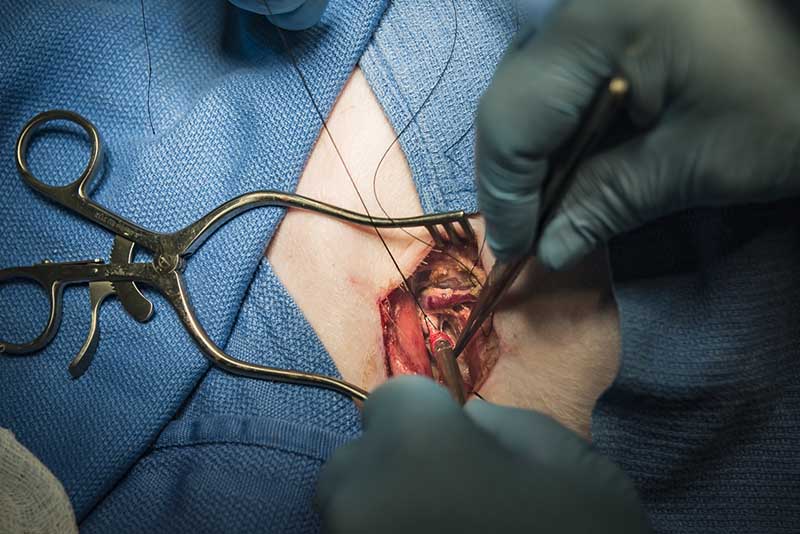
While off ECMO, the specialist and physicians will conduct “patient” management and ensure there are no clot formations within the ECLS circuit or any cannula remaining within the “patient” model.